

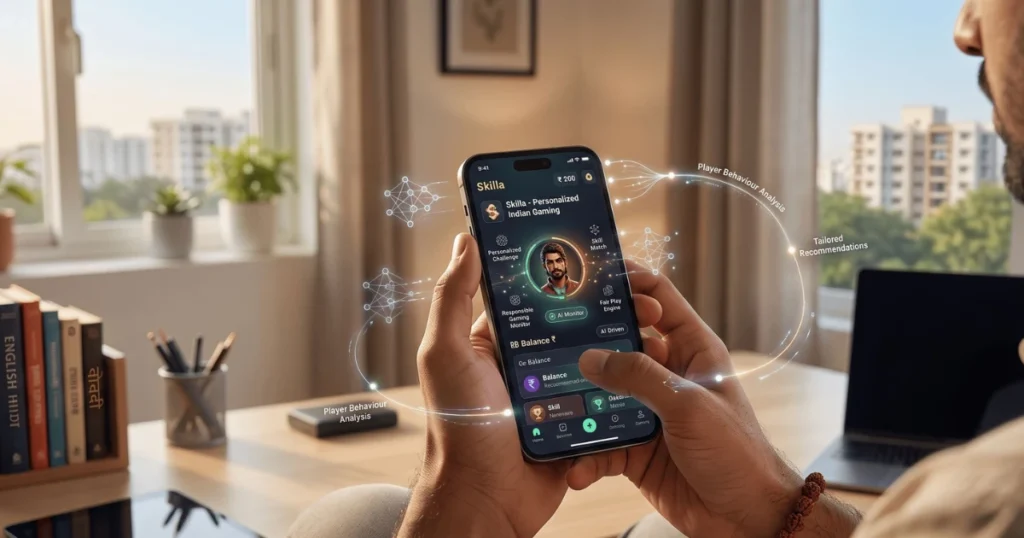
India is currently experiencing a profound technological renaissance. With 5G networks rapidly expanding across the subcontinent and smartphone penetration reaching unprecedented levels, the domestic digital entertainment landscape has shifted fundamentally. At the bleeding edge of this transformation is the iGaming sector. Modern platforms like Lucky Star have evolved far beyond basic entertainment portals; they are now highly sophisticated, cloud-native software ecosystems that leverage real-time data processing to deliver seamless experiences to millions of concurrent users.
For technology enthusiasts and software developers, the architecture powering these platforms offers a fascinating case study in scalability, security, and mobile-first engineering.
The Architecture of Low Latency: Edge Computing
In the realm of real-time digital entertainment, latency is the ultimate enemy. A delay of just a few milliseconds can ruin the user experience, particularly in fast-paced live gaming environments. To combat this, modern iGaming infrastructures have aggressively adopted Edge Computing.
Instead of relying on a single centralized server, platforms deploy geographically distributed edge nodes across various regions in India. By bringing the computational power and data storage closer to the end-user-whether they are in a bustling tech hub like Bengaluru or a Tier-3 city accessing the web via a mobile network-developers can drastically reduce round-trip data times. This decentralized cloud approach ensures that live streams, mathematical algorithms, and user inputs remain perfectly synchronized on screen, regardless of local bandwidth fluctuations.
Artificial Intelligence and Machine Learning Integration
The integration of Machine Learning (ML) has transitioned from an experimental feature to a core backend requirement for top-tier iGaming platforms. AI applications in this sector generally fall into two critical categories:
- Behavioral Personalization: Recommendation algorithms continuously analyze user interaction data. By processing variables such as time spent on specific interfaces and game preferences, the AI dynamically alters the front-end UI to present the most relevant content to individual users, much like a streaming service curates watchlists.
- Predictive Security Analytics: Security is paramount when handling high volumes of micro-transactions. Deep learning models run in the background to monitor financial data streams in real time. These algorithms are trained to detect anomalous network behavior, instantly flagging and mitigating potential fraud, DDoS attacks, or account compromise attempts before they affect the end-user.
Progressive Web Apps (PWAs) and Mobile Optimization
Because India is overwhelmingly a mobile-first market, heavy client-side downloads are a significant barrier to entry. To solve this, developers are heavily utilizing Progressive Web Apps (PWAs) and advanced HTML5 frameworks.
PWAs allow complex applications to run directly through a mobile browser while functioning identically to a native app. By offloading heavy rendering tasks to the cloud and utilizing hardware-accelerated WebGL for graphics, these platforms ensure that even budget Android devices with limited RAM can execute high-fidelity animations without draining the battery or causing thermal throttling.
Looking Ahead
The technological stack powering India’s iGaming boom is a testament to modern software engineering. By pushing the limits of edge computing, deploying real-time AI security protocols, and mastering mobile-first optimization, these platforms are not just entertaining users-they are setting a new standard for high-performance web applications across the entire digital sector.


















Leave a Feedback